
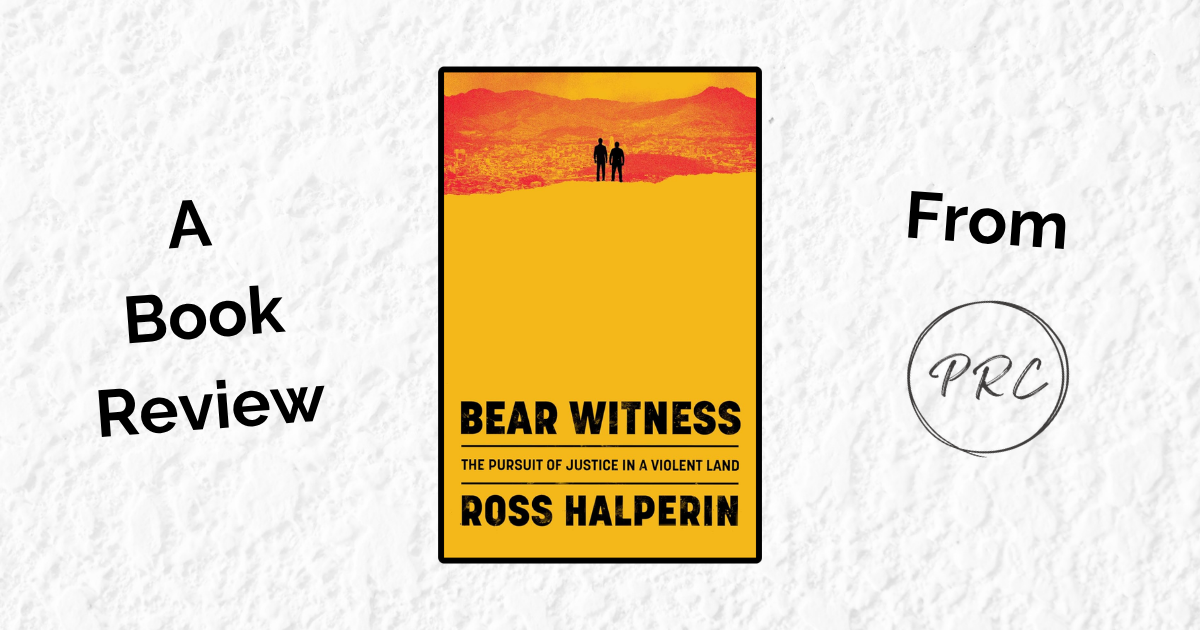

Bear Witness: The Pursuit of Justice in a Violent Land is an amazing tale of courage and persistence. Written by Ross Halperin and published by Liveright, an imprint of W.W. Norton & Company, the book tells the story of Kurt Ver Beek and Carlos Hernández, who live in a violent barrio in Honduras where gangs run rampant, largely ignored by the authorities, many of whom are corrupt.
Ver Beek, an American sociologist, and Hernández, a native Honduran, are both motivated by their Christian faith to serve the poor. They form a nonprofit organization called the Association for a More Just Society (ASJ) and initially focus on charitable work, establishing a school, clinic, as well as a microlending program for women starting businesses and for families seeking to improve their homes with basic necessities.
As they continue to work to alleviate the poverty of their neighbors, they realize how the violence of the local gangs impedes their work. Seeing the ineffectiveness of the local legal system, Ver Beek and Hernández turn their focus to gathering evidence and pushing for prosecution of specific gang members and other criminals.
Eventually, they move beyond local reforms toward transforming national institutions, confronting corrupt politicians, and challenging vast criminal networks. In their pursuit of reforms, they begin working with Juan Orlando Hernández during his rise to national power and later through his presidency. However, Hernández becomes a controversial figure and is eventually convicted of drug trafficking in the United States. The association with Hernández taints public perception of ASJ.
Author Halperin has written an incredibly detailed account of the work of ASJ and its efforts to bring justice to the Honduran people. However, sometimes he goes into so much detail when giving the history of places or minor characters that it’s easy to lose track of both the events and their chronology. Rather than these extensive descriptions, I would have liked to know more about the personal lives of Kurt and Carlos, such as how their families reacted to living in dangerous conditions and having to watch their loved ones devote their time and energy to others.
Still, the book raises some interesting questions and would be a good choice for a church or other adult study group. Some of the topics it raises that are ripe for discussion include self-sacrifice, God’s calling, cultural differences, ethical problems when working with a corrupt government, and the moral dilemma of putting your children in danger because of your ministry.
ASJ has produced a study guide for the book. The guide is divided into five sections, each including a quote from the book, a quote from a justice leader, reflection questions, and an additional “Going Deeper” activity. The guide also includes a note from Kurt Ver Beek:
We created this guide to help you engage with the same moral dilemmas that Carlos, our team, and I face nearly every day. We ask these questions as we navigate the complexities of justice, corruption, and the challenges of working in a place like Honduras.
As we discuss difficult decisions—those involving our own moral frameworks, or how to deal with those benefiting from injustice—it’s a way for you to reflect on your own journey and commitment to justice in your own contexts for causes that you care about.
The publisher provided a review copy of this book.